B2B SaaS Case Studies That Actually Get Read
Most B2B SaaS case studies are ignored. Here's how to write ones that pull readers in, build real trust, and move buyers closer to a decision.
Edvin Åslund
Founder of Aboast
You've read a bad B2B SaaS case study. You know the format: a logo at the top, a vague problem statement, three bullet points about features used, and a quote so polished it sounds like it came from legal. You close the tab. Nothing stuck.
The frustrating part is that the underlying story was probably good. A real team had a real problem, tried your product, and things got better. But somewhere between the customer interview and the published page, all the life got edited out. If you're writing B2B SaaS case studies and wondering why nobody reads them, that's usually where the problem lives.
Start with the before, not the company
Most case studies open with a company overview. "Acme Corp is a mid-market logistics firm with 200 employees across four countries." Nobody cares yet. You haven't given them a reason to.
Open with the pain instead. What was the person's day actually like before they found you? What was breaking? What meeting were they dreading? The more specific you get, the more a reader in a similar situation thinks: "That's me." That recognition is what keeps them reading.
A good opening sentence for a case study sounds less like a press release and more like the first line of a good short story. "Every Monday, Sarah spent two hours manually copying customer feedback from emails into a spreadsheet — and she was the head of product." Now I want to know what happened next.
Pick the right customer to feature
Not every happy customer makes a good case study subject. You're looking for a few specific things.
- They had a clear, describable problem before — not just "things could be better".
- The outcome is measurable or at least concrete. "We cut churn" beats "we improved retention."
- They're willing to be specific on the record. A customer who will only approve vague quotes is going to give you a vague case study.
- They match the profile of buyers you're trying to attract. A case study about a 5,000-person enterprise doesn't help you sell to 30-person startups, and vice versa.
It's worth being selective here. Two great case studies will do more for you than ten mediocre ones. Customers who reached out on their own to say thank you often make the best subjects — they're already invested in the story.
The interview is where the story lives
A 30-minute conversation will give you better material than any written survey. People say things in conversation they'd never type into a form. They go off-script. They use phrases like "it was a nightmare" or "I honestly didn't think it would work" — and those are the lines you want.
Go in with a loose structure, not a rigid script. A few questions that consistently produce good material:
- "Walk me through what was happening before you started using us."
- "Was there a specific moment you decided something had to change?"
- "What did you expect, and what actually happened?"
- "If a peer in your industry asked you about us, what would you tell them?"
That last question is gold. It surfaces the natural language your customer uses to describe your value — language that will resonate with other buyers far more than anything you'd write yourself. If you want shorter written versions of these prompts for everyday testimonials, see testimonial questions to ask customers.
B2B SaaS case studies need a real structure
The classic "Challenge / Solution / Results" structure isn't wrong, it's just often executed badly. The challenge section is too vague, the solution section reads like a feature list, and the results section is a single percentage with no context. Here's how to tighten each part.
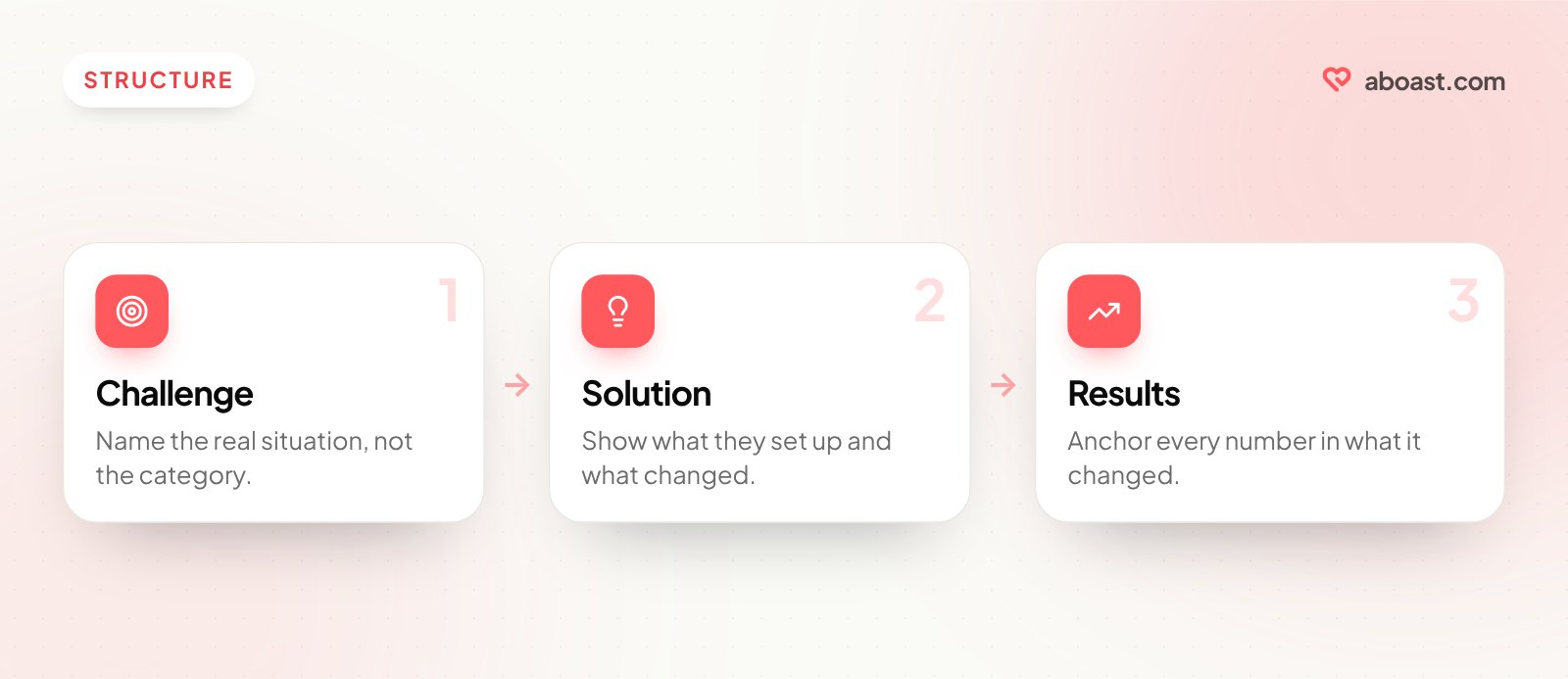
Challenge: make it feel real
Name the specific situation, not just the category of problem. "They needed a better way to manage customer feedback" is a category. "Their support team was fielding the same five feature requests every week with no way to show the product team which ones were most urgent" is a situation. One of those makes a reader lean in.
Solution: show the thinking, not just the tool
Explain how they actually used the product — what they set up, what workflow changed, who was involved. This section should help a prospective buyer picture themselves doing the same thing. Feature names alone don't do that.
Results: anchor numbers in meaning
"Response time dropped from two days to four hours" is better with context: "...which meant the team stopped losing deals to slower follow-ups." The number gets its meaning from what it changed in the business, not from the number itself. If you don't have hard numbers, use time saved, work that no longer needs doing, or a specific decision that became possible.
Use the customer's voice, not a cleaned-up version of it
The quote is the most-read part of any case study. Buyers scan, and the quote is what they land on. Most quotes get over-edited into something that sounds like a press release because the writer is trying to make the customer sound professional. Resist this.
Here's the kind of quote that works:
"I was skeptical at first — we'd tried two other tools and neither stuck. But within a week our team was actually using it, which honestly surprised me."
That quote works because it's honest. It acknowledges doubt. It sounds like a person. Compare it to: "This solution has significantly improved our team's operational efficiency." One of these builds trust. The other erodes it.
When you send a draft to the customer for approval, ask them to flag anything that doesn't sound like them — not just anything that's inaccurate. That framing gets you better edits.
Distribution matters as much as writing
A case study buried on a /customers page that nobody visits is a wasted asset. Think about all the places a buyer might encounter it.
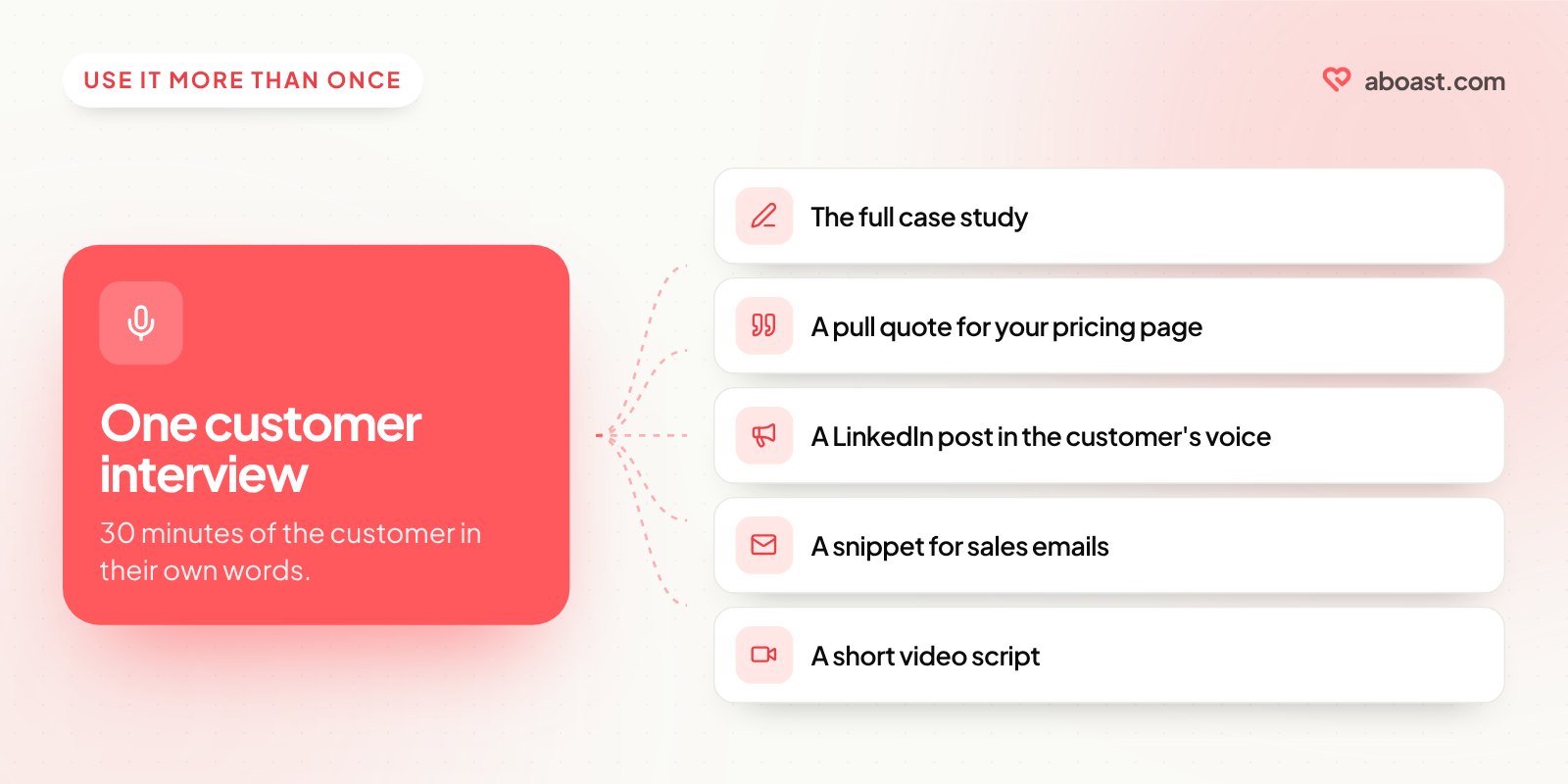
- Sales decks and proposals — a relevant case study sent mid-deal answers "has this worked for someone like us?" better than any feature comparison.
- Onboarding emails — showing a new customer how someone similar succeeded sets expectations for what good looks like.
- Landing and pricing pages — a short pull quote from the case study near a CTA carries a specific result, which a generic compliment can't. See pricing page testimonials for where it fits.
- LinkedIn — a two-paragraph version of the story, told from the customer's perspective, reads more naturally in the feed than a product post.
The story needs to meet the buyer where they already are, rather than waiting for them to click "read our case studies."
It's also worth repurposing. A single 800-word case study can become a LinkedIn post, a sales email snippet, a testimonial pull quote, and a short video script. You did the hard work in the interview — use it more than once. Where to put testimonials on your landing page covers the on-site side of that.
Good B2B SaaS case studies don't require a professional writer or a big content budget. They require asking better questions, resisting the urge to over-edit, and treating the customer's story with the same care you'd want someone to treat yours. If you want a steady supply of raw material — quotes, outcomes, specific details — between interviews, aboast gives you a collection link to send after every win and one place to keep what comes back. Start with how to ask for a testimonial.